

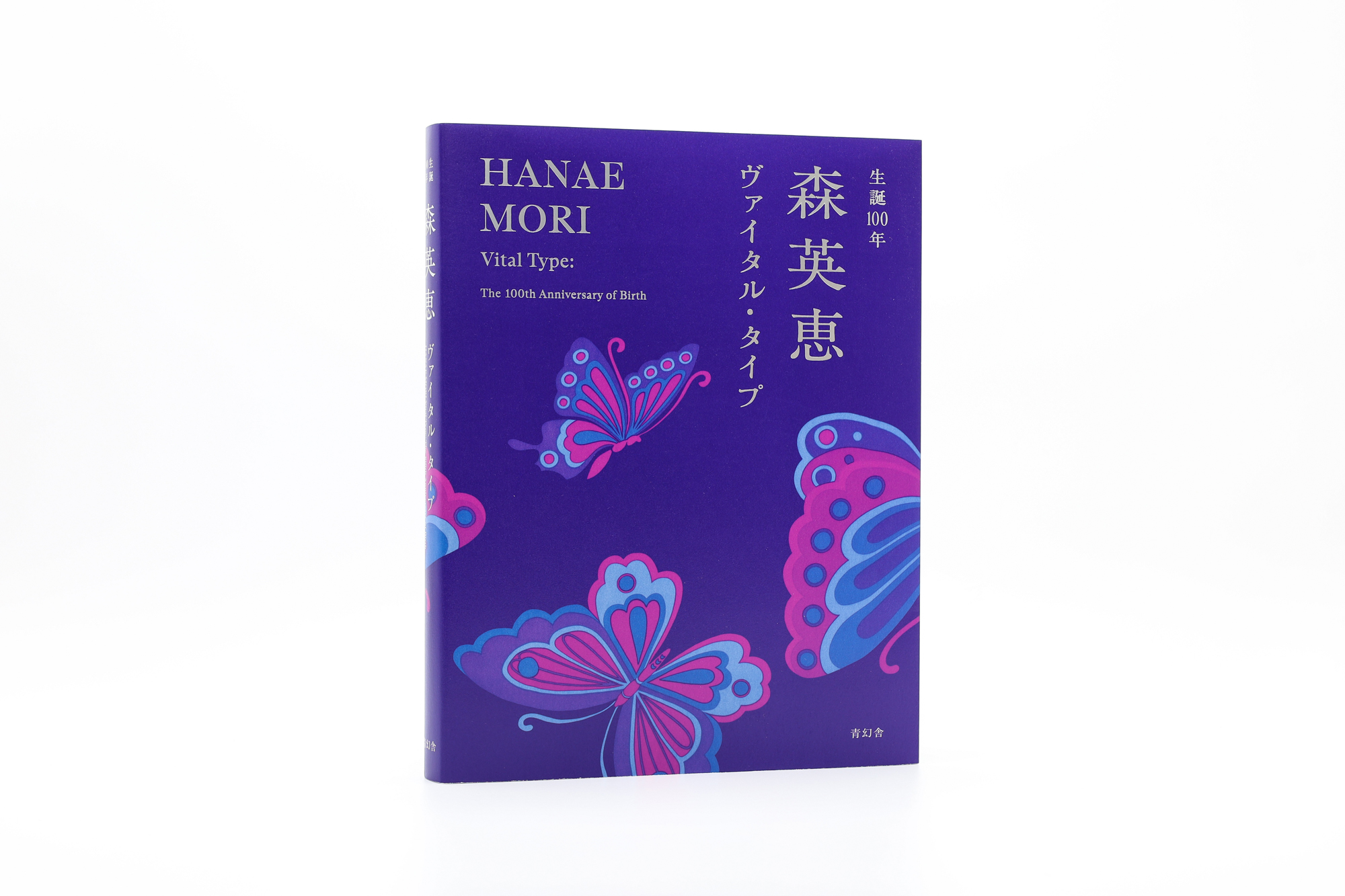
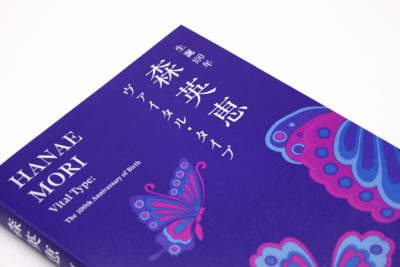
Hanae Mori—Vital Type: The 100th Anniversary of Birth









- Price:
- 4,000 yen (JPY)
- Author(s):
- Iwami Art Museum and the National Art Center, Tokyo
- Language(s):
- Japanese and English
- Size:
- 280 × 218 × 25 mm, 1050 g
- Pages:
- 352
- Binding:
- softcover
- Release date:
- 20260507
- ISBN:
- 978-4-86831-033-4 C0070
A full look at the seventy-year trajectory of a beauty pioneer who took wing from Japan into the world.
[Design, Crafts, Architecture] Books in the category
New Books
NewFairy Tale Mode
Ayaka Yamashita (Chiba City Museum of Art)
New Books

Bang & Olufsen Sound & Design
Bang & Olufsen Japan
New Books

Threads of Beauty 1995–2025: Wrapped in Time, Wrapped in Wind
Yuriko Takagi
New Books


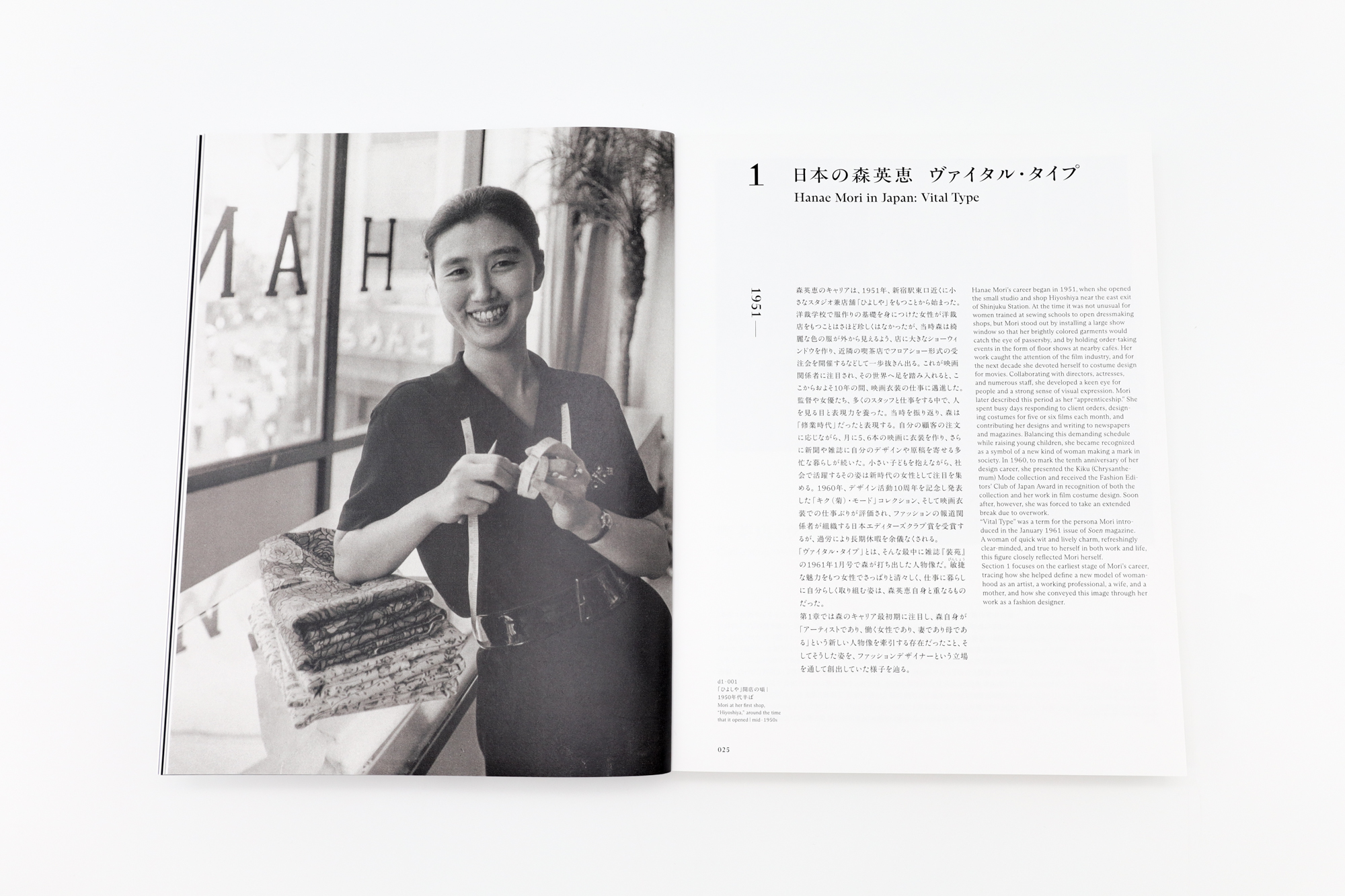
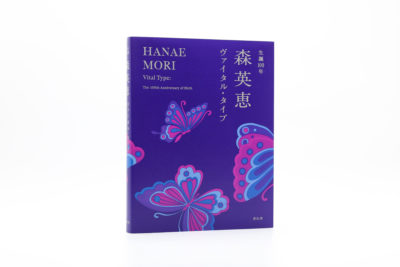
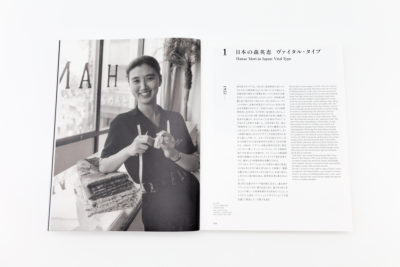
In 1961 Hanae Mori proposed the term “Vital Type” to describe vivacious women who embraced work and life with equal passion. She herself embodied that ideal throughout her seven decades on the front lines of the fashion industry, from the opening of her first boutique in Shinjuku in 1951 to her passing at the age of ninety-six.
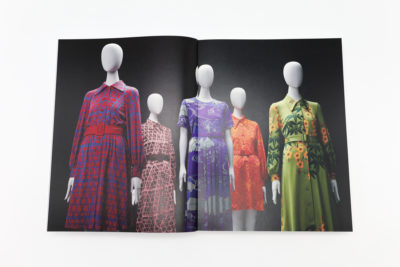
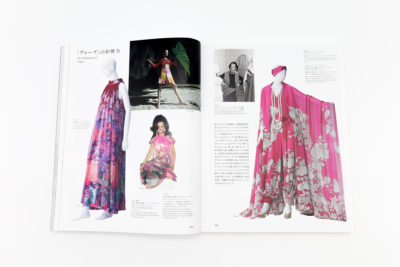
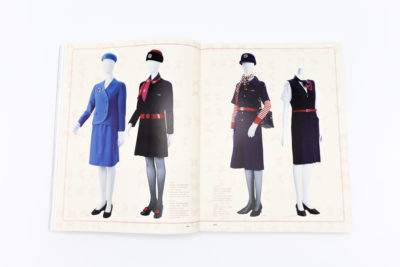
This volume commemorating the hundredth anniversary of Mori’s birth surveys the full range of her oeuvre, including the movie costume designs that helped propel her to success, and her collections for the Paris fashion weeks as the first Asian full member of the Chambre Syndicale de la Haute Couture. Mori and her brand were ever one step ahead of their times in many aspects—the cultivation of global markets through focus on Japanese aesthetics and artisanship; the utilization of media strategies leveraging print, video, and spatial platforms—and the roughly 500 works and archival materials in the book amply illuminate their trailblazing thinking and practice.
Chapter 1. Hanae Mori in Japan
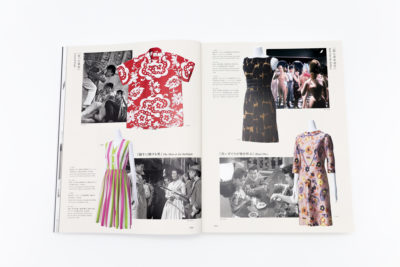
Through the 1950s, Mori emerged as the leading new model of a woman who was at once “an artist, a working professional, a wife, and a mother.” The chapter also examines her work with movie costume design, which paved the way for her later success.
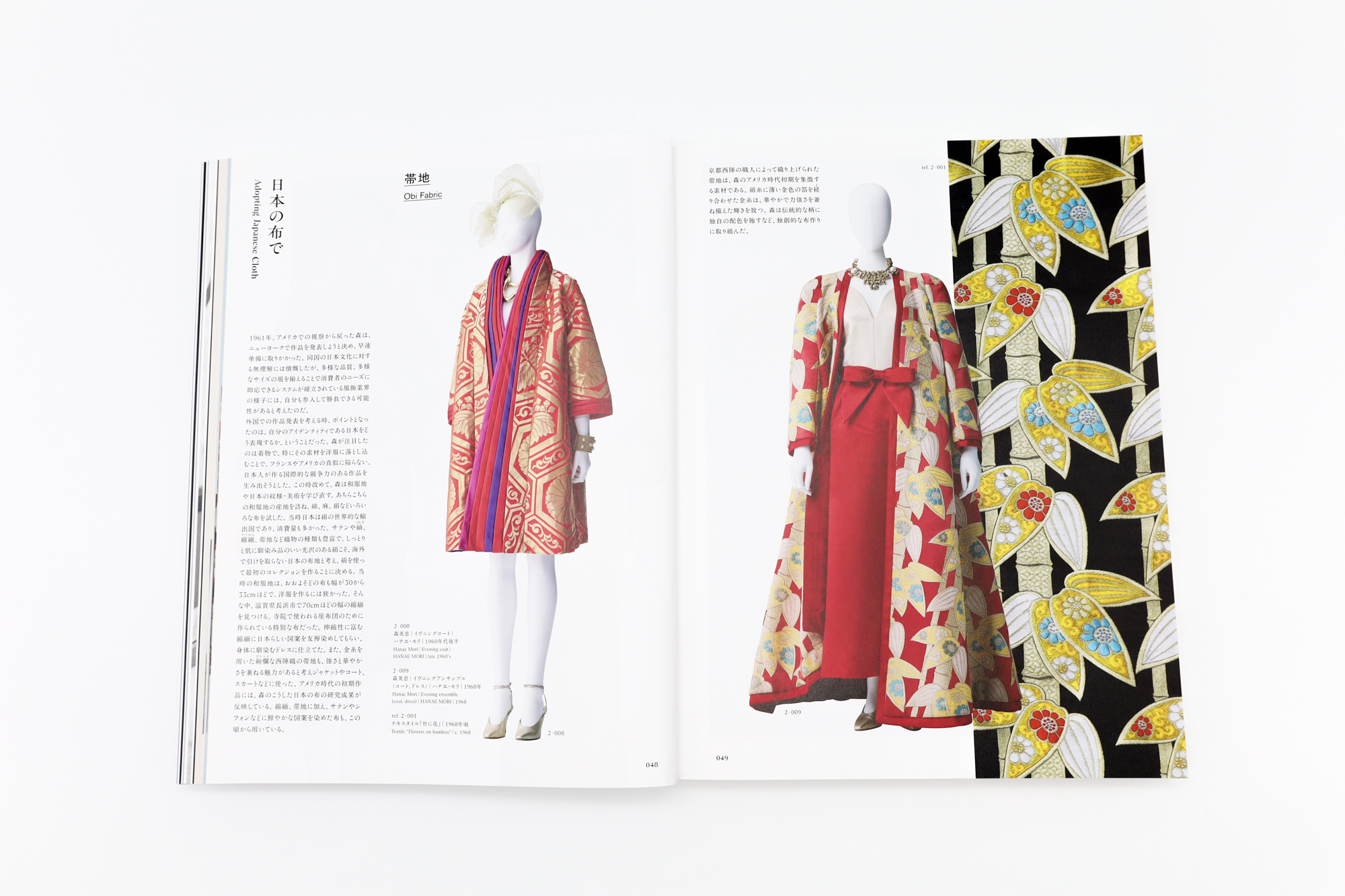
Chapter 2. Hanae Mori in America
Mori’s New York debut collection in 1965 drew prominently on Japanese aesthetics and textiles. The pages here trace how the show’s success won her access to luxury department stores and elite society in the United States, spurring her meteoric rise.
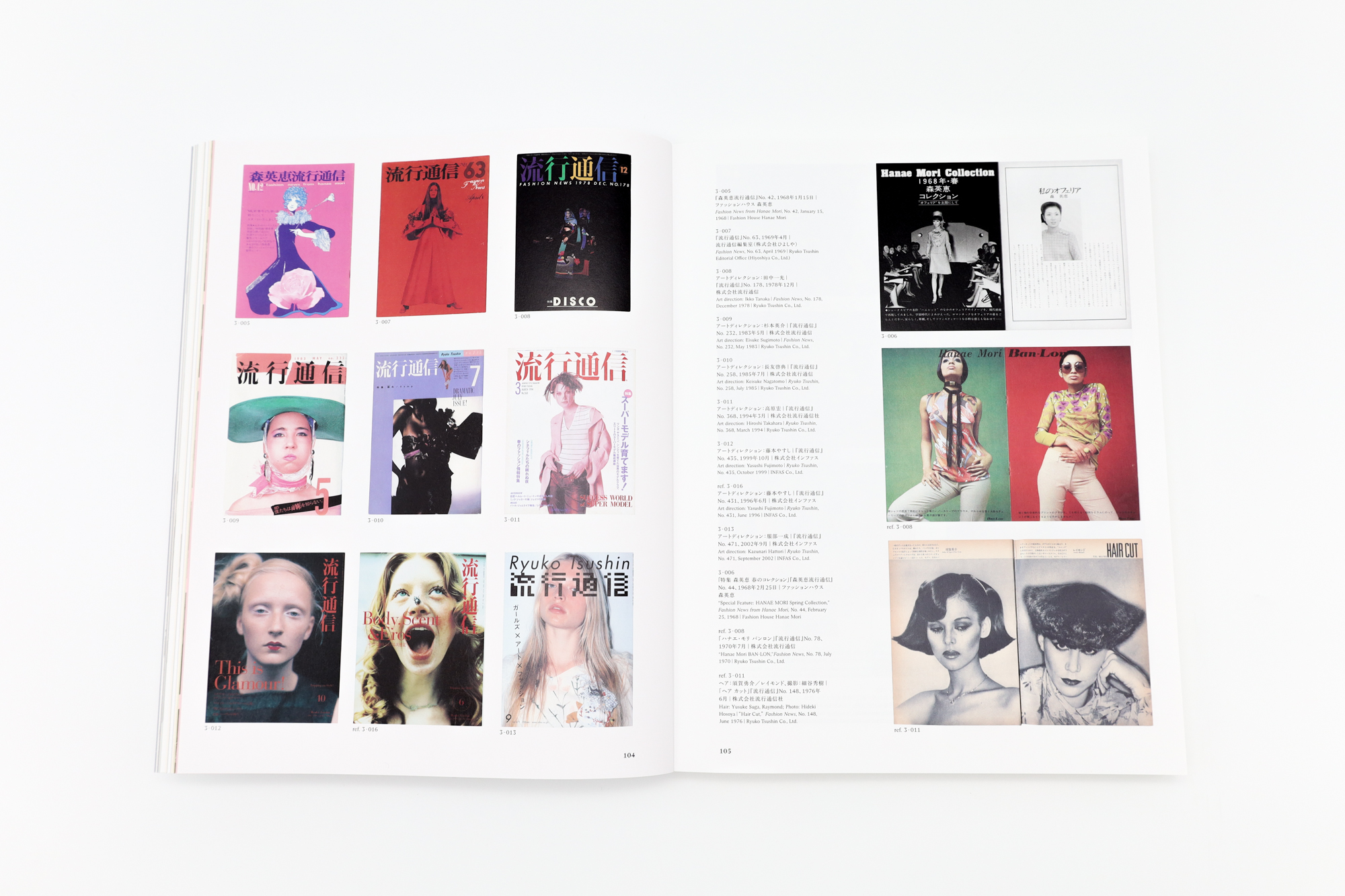
Chapter 3. A Base for Fashion Information
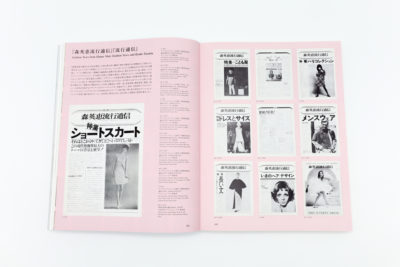
The focus in this chapter is on Mori’s innovative efforts to develop new outlets for fashion-related content, including the magazine Fashion News from Hanae Mori, the television show Fashion tsushin, and the flagship Hanae Mori Building in Tokyo’s Omotesando district.
Chapter 4. Hanae Mori in France
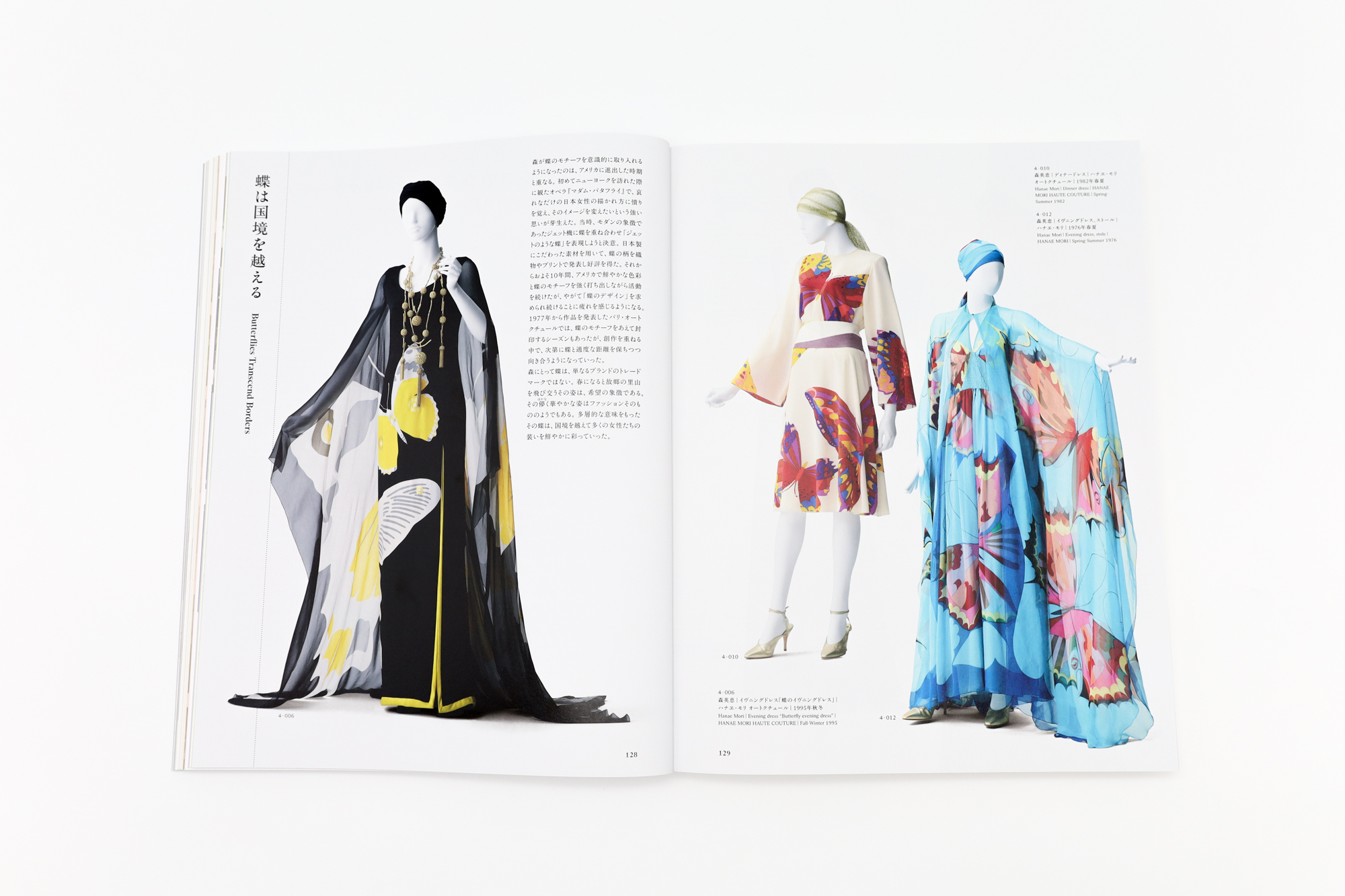
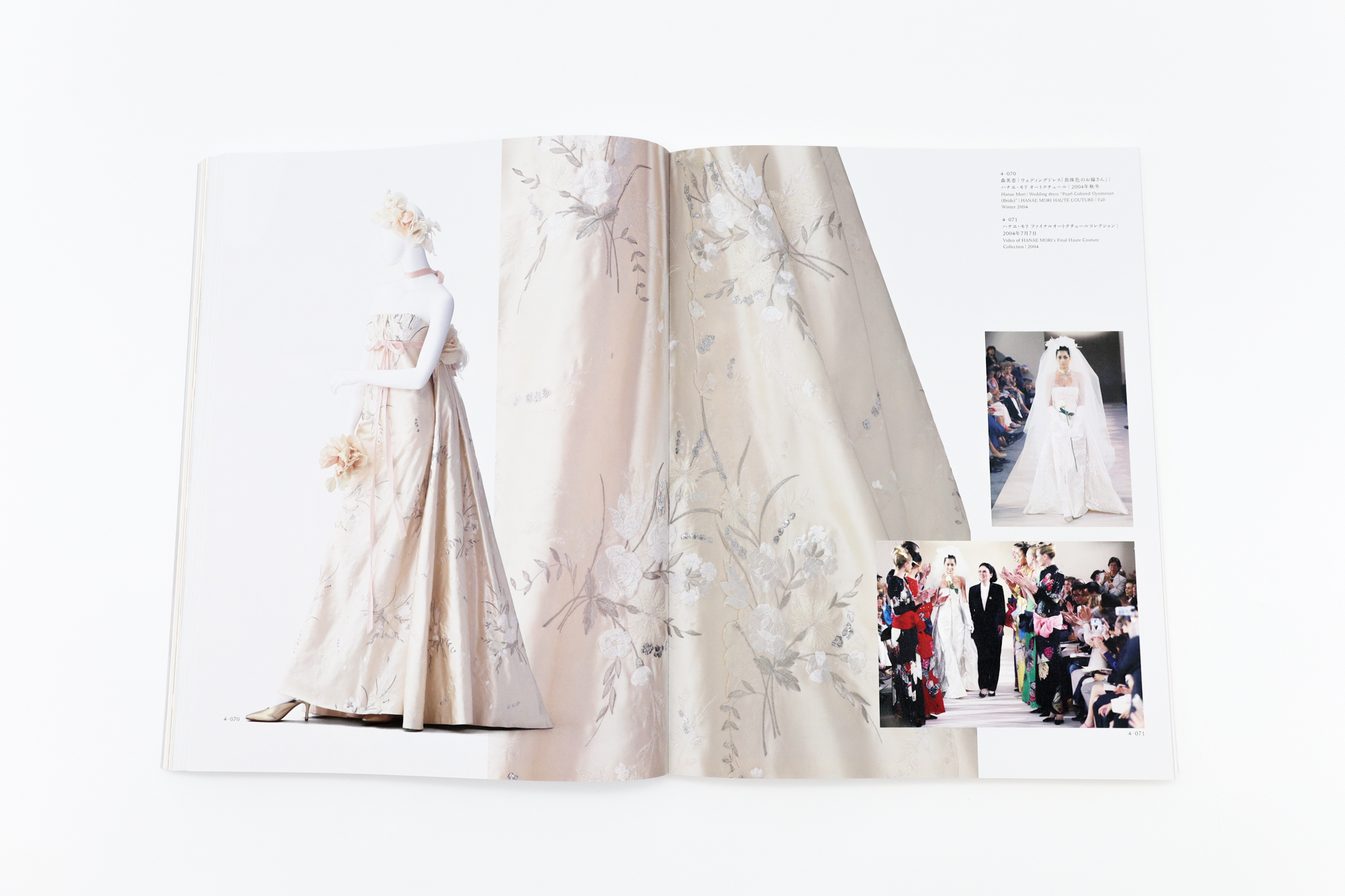
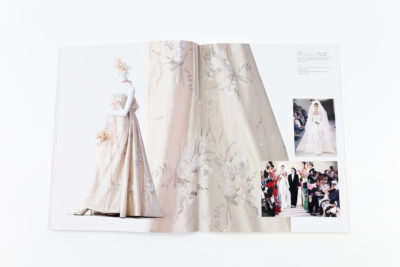
In 1977, Mori became the first Asian to be admitted to the Chambre Syndicale de la Haute Couture. This chapter showcases the sublime display of materials and virtuosity in every one of her Paris collections, from her 1977 debut to her farewell show in 2004.
Chapter 5. Hanae Mori and Artists
A wealth of photos and text offers insight into Mori’s creative collaboration with photographer Ikko Narahara, graphic designer Ikko Tanaka, actors Mariko Okada and Tetsuko Kuroyanagi, artist and graphic designer Tadanori Yokoo, model Hiroko Matsumoto, and singer Shinobu Sato.